
Grooved Tefillin
Grooved Tefillin – The Highest Standard of Hiddur Where Holiness and Quality Come Together

Writing and Selling Tefillin

Manufacturing of Grooved Tefillin Batim

Free Consultation & Guidance
by a Certified Moreh Tzedek Before Purchase

STaM Parchment for Sale

Bar Mitzvah Preparation
Samples of Our Scribes' Script
Deluxe Ari Nusach A
Rabbi Yemini shlit"a
Deluxe Chabad Nusach A
Rabbi David shlit"a
Deluxe Sephardic Nusach A
Rabbi Yehonatan shlit"a
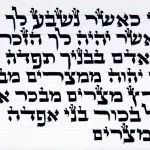
Deluxe Sephardic Nusach
Rabbi Shukrun shlit"a
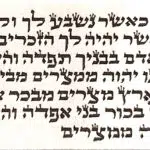
Deluxe Sephardic Nusach A
הרב זוהר שליט"א
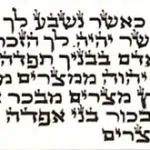
Deluxe Mini Sephardic Nusach AA
הרב שי שליט"א
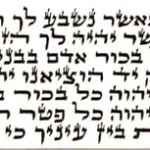
Deluxe Mini Sephardic Nusach A
Rabbi Daniel shlit"a
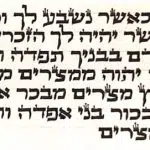
Deluxe Mini Sephardic Nusach A
Rabbi Oran shlit"a
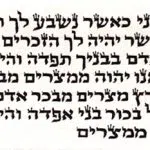
Deluxe Sephardic Nusach AA
Rabbi Joseph shlit"a
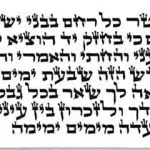
Deluxe Sephardic Nusach AA
Rabbi Avichai shlit"a
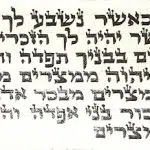
Deluxe Sephardic Nusach AA
Rabbi Zerach shlit"a
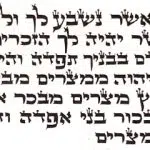
Deluxe Ashkenazic Nusach A
Rabbi Elitzur shlit"a
Do You Already Have the Parshiyot? You Deserve Grooved Batim Too!
What Are Grooved Tefillin?
What Are Grooved Tefillin?
The head Tefillin must consist of four separate compartments, each containing one of the four Torah passages prescribed for Tefillin, as stated in the Talmud (Menachot) and codified in the Shulchan Aruch (Orach Chaim 32:38).
The separation between these compartments must be clearly visible from the outside. As taught in Menachot 34b, “If the grooves are not visible, the Tefillin are invalid.” This requirement is also codified by the Rambam (Hilchot Tefillin 3:11) and the Shulchan Aruch (Orach Chaim 32:40).
In Grooved Tefillin, the four compartments are distinctly separated by visible grooves, created by leaving an air gap of approximately 0.2 mm between each compartment. This construction emphasizes the clear external separation required by Halacha and represents the highest standard of craftsmanship and hiddur mitzvah.
“Grooved Tefillin represent the highest standard of Hiddur, and it is preferable that they be made in this manner.”
The Sages of Israel throughout the generations have unanimously ruled:
- No adhesive whatsoever between the compartments
- The air gaps between the compartments are clearly visible
- No possibility of artificial or imitation grooves
- A continuous, clearly visible groove extends all the way to the base of the Batim
- The stitching sinew (gid) can pass completely between the compartments from top to bottom during sewing
- Each Bayit is marked with a unique identification code
- Each Bayit is fitted with a precisely matched lid to preserve its perfect square shape
- Guaranteed square integrity for every Bayit
- Every Bayit bears a quality control seal
- Crafted exclusively using a manual hydraulic press
- Prominent Shin with exceptionally straight walls
- Precisely squared stitching with perfectly even spacing
- Accurately squared Batim construction
- Wide and deep internal compartments
- The Batim are sewn using a single sinew (gid), including passage between the internal partitions
Among the Torah Scholars Who Wear Grooved Tefillin from
Keset HaSofer:
Keset HaSofer, established with the blessing of Maran Rabbi Chaim Kanievsky shlit”a, is led by Rabbi Dehari, a certified Moreh Tzedek in the field of STaM, with more than 19 years of experience in the writing of Torah Scrolls, Tefillin, and Mezuzot according to the highest halachic standards and meticulous traditions.
This unique combination of extensive practical experience and halachic expertise ensures the highest level of craftsmanship, making Keset HaSofer synonymous with uncompromising quality and excellence.
הרב יונתן אדוארד שליט"א: "אנחנו רוצים להעלות בקודש, וברור שזו עליה בקודש"
Read Moreהרה"ג דב קוק שליט"א: תפילין חרוצות הידור חשוב מאוד...
Read Moreהרה"ג שלמה מחפוד שליט"א: "אין מכון כזה בארץ עם כל הדקדוקים הקטנים ביותר"
Read Moreהמקובל האלוקי הרה"ג בניהו שמואלי: אלו תפילין שהאר"י הקדוש הניח!
Read Moreהרב אוירבך שליט"א: "הידור חשוב מאד"
Read MoreBar Mitzvah Preparation & Guidance
*Free Bar Mitzvah Preparation with the Purchase of Grooved Batim
Your son has reached the age of Bar Mitzvah—a milestone filled with excitement and meaningful preparation. The unforgettable experience of putting on Tefillin for the very first time will remain with him for a lifetime.
During a guided tour of our workshop, he will gain firsthand insight into the meticulous process of crafting Grooved Tefillin. Combined with personalized Bar Mitzvah preparation and practical instruction in the proper way to wear Tefillin, this unique experience will leave him inspired, uplifted, and deeply connected to this important mitzvah.
Beit Hora'ah – Halachic Guidance Center
Grooved Tefillin are Tefillin in which the four compartments are clearly distinguishable by three visible grooves separating them. These grooves extend completely through the Batim, allowing a sheet of paper to pass between each compartment. In many Tefillin available today, the appearance of separate compartments is created by external grooves made after the coloring process, rather than by actual separation.
- All four Torah passages must be present.
- The Batim must contain no holes that would invalidate them.
- The Parshiyot must be inserted straight and in the correct orientation.
- Hair and parchment wrapping must be placed around the Parshiyot according to Halacha.
- The writing must be clean and free of defects.
- The Parshiyot must be inserted in the correct order and placed securely within the Batim.
- The square shape of the Batim must be maintained throughout the stitching process.
- Every stage of the process must be performed Leshem Kedushat Tefillin (for the sanctity of the Tefillin).
These instructions are also cited in several classic Kabbalistic works, including Sha'ar HaMitzvot, Olat Tamid, and Mishnat Chassidim. Many later authorities explain that this represents the highest level of Hiddur in the construction of Tefillin.
The grooves between the compartments are checked for defects, as well as any holes that may invalidate the Batim. The straps are inspected to ensure they remain black, undamaged, and maintain the required halachic width. Finally, the Parshiyot are examined by a certified Magi'ah to verify their halachic validity.
Today it is possible to manufacture Grooved Tefillin with complete air gaps between the compartments while preserving the perfect square shape, making them the preferred choice according to many halachic authorities.
This includes the preparation of the parchment, the quality of the Batim and straps, the level of the Sofer who writes the Parshiyot, the beauty of the script, and the fine craftsmanship of the Batim, in fulfillment of “This is my God, and I will glorify Him.”
The sewing must be done Leshem Kedushat Tefillin — for the sake of the sanctity of Tefillin. The stitching holes should be as small as possible, so the thread does not shift and the stitches remain even and precise.
Today, due to the many issues that can arise, leading Torah authorities have ruled that Tefillin should be checked twice every seven years. As an added measure of piety, some have them checked every year.
Many Torah sources praise the great spiritual value of immersion in a Mikveh, as it brings added purity, holiness, and refinement. For this reason, it is especially fitting for a Sofer, who writes sacred texts, to be careful in this matter.
The second type of Hiddur relates to the halachic quality of the mitzvah. Since non-grooved Tefillin may raise concerns according to some halachic opinions, Grooved Tefillin are considered an important enhancement, even though standard kosher Tefillin should not be invalidated.
The Tefillin on the head and arm remind us that Hashem’s providence is upon our thoughts and actions at all times. Touching them serves as a constant reminder that all our deeds are guided by Divine supervision.
American hides are carefully selected for their quality, thickness, elasticity, and durability. Since they are shipped frozen, the tanning process can begin in Israel Leshem Kedushat Tefillin, making them preferable according to many halachic authorities. Although they are more expensive, they represent the highest standard of quality and Hiddur.
Machine squaring is performed with electrically powered equipment, while hand squaring is carried out entirely through human effort. Although many authorities accept machine squaring as halachically valid, numerous leading Poskim recommend hand squaring for Mehudar Tefillin, considering it the preferred method for fulfilling the mitzvah according to the highest standards.
- Processing the leather for the Batim.
- Processing the leather for the straps.
- Forming the square Batim.
- Creating the embossed Shin.
- Making the Titura.
- Tying the knots.
- Wrapping the Parshiyot with hair and parchment.
- Sewing the Batim.
- Coloring the straps.
This unique construction allows the stitching sinew to pass between the compartments, ensures there is no adhesive connecting them, and clearly demonstrates that the Batim are genuinely separate.
- No adhesive between the compartments.
- Clearly visible air gaps.
- Continuous grooves extending to the base.
- Single-sinew stitching throughout the Batim.
- Individual identification code for every Bayit.
- Precision-matched lids to preserve the square shape.
- Quality-control certification for every Bayit.
- Manual hydraulic press manufacturing.
- Precisely formed Shin.
- Accurate square stitching and Batim.
- Deep and spacious internal compartments.
Additional stringencies include hand-made parchment, speech restraint during writing, immersion in a Mikveh, and meticulous adherence to all accepted halachic traditions.
A Magi'ah possesses a higher level of expertise than a Sofer and must be thoroughly familiar with the laws governing STaM, the accepted rulings of the Poskim, and the customs of the various Jewish communities. Because of the tremendous responsibility involved, every Magi'ah should hold official certification confirming that he has successfully passed examinations in the laws of STaM.
